Your Trusted 24 Hours Service Provider!


-
 Call Us+86-158-0331-9351
 -
 Emailcarrie@sinopulse.cn
 -
 AddressHandan City, Hebei , China
ac vacuum hoses
Oxygen & Acetylene Welding Hose: field notes from the shop floor If you spend time around fabrication bays or HVAC brazing crews, you get picky about hoses. I certainly do. The first thing I look for in an acetylene hose is how it behaves after a few hot summers and a couple of winters—not just on day one. Manufactured in Handan City, Hebei, the Oxygen & Acetylene Welding Hose I’ve been testing has that familiar balance: snug braid, clean cover, and predictable bend radius. And yes, the color coding actually helps when you’re troubleshooting a rig at 6 a.m. What’s inside (materials and build) Construction is textbook, but well executed: black, smooth synthetic rubber tube; high‑strength synthetic yarn braiding; blue/green/red smooth synthetic rubber cover. Working pressures run 10 BAR or 20 BAR options, with burst at ≈30/60 BAR, safety factor 3:1. Temperature window is -32°C to 80°C, which in real-world use covers most temperate job sites. The cover can be pin‑pricked on request to help gas permeation management—handy in some setups. Tube Black synthetic rubber, smooth bore Reinforcement High‑strength synthetic yarn braiding Cover Blue/green/red smooth synthetic rubber Working Pressure 10 BAR or 20 BAR (≈145 or 290 psi) Burst Pressure 30 BAR / 60 BAR (safety 3:1) Temperature -32℃ to 80℃ Standards Designed toward ISO 3821; OSHA 1910.253 practices Process flow and testing Methods: precision extrusion, controlled yarn braiding, and continuous vulcanization. Every batch goes through hydrostatic testing at 2× WP (sample lots), adhesion and tensile checks, ozone exposure per ISO 1431 benchmarks, and dimensional tolerance review. One recent lot I saw averaged 62 BAR burst on the 20 BAR line at 23°C—about what you’d hope for. Service life? Many customers say 2–5 years under daily shop use; mobile rig work is tougher—dust, sun, toss‑and‑drag—so, to be honest, plan inspections quarterly and replace on visible cracks or fitting wear. Applications and advantages Oxy‑fuel cutting and welding (fabrication shops, shipyards, construction sites) Brazing in HVAC/R and copper tube work Art glass studios and light metal workshops Advantages: stable handling, consistent crimp retention, clear color coding, and sizing that plays nicely with standard “B” fittings (RH oxygen, LH acetylene, check your local spec). It seems that crews notice the cover resists nicks better than some generic imports—small thing, big savings. Industry trends A few currents worth noting: more shops ask for twin‑line assemblies to cut setup time; better ozone‑resistant covers for outdoor fleets; and, surprisingly, demand for acetylene hose with printed traceability lines (QR/lot codes) is rising because auditors love them. Vendor snapshot (quick comparison) Vendor WP/Burst Standard Aim Lead Time Customization Hydraulichoseplus (Hebei, China) 10/20 BAR; 30/60 BAR burst ISO 3821 target ≈2–4 weeks Colors, twin-line, branding, lengths Parker (series example) Similar class ISO/industry norms Stock-dependent Broad fittings library Local importer Varies Varies Fast if in-country Limited lot traceability Customization and logistics Options include twin‑line bonding, cover colors, private labeling, 50–100 m coils, and pre‑crimped ends. Shipping from South Of Xingfu Road, Feixiang Industrial Zone, Handan City, Hebei, China—LCL or full containers. Documentation usually ships with CoC and pressure test sheets; ISO 9001 factory files on request. Mini case notes Shipyard retrofit: switching to 20 BAR line reduced kinks during vertical climbs; crew reported fewer flameouts—likely steadier flow. HVAC contractor: twin‑line acetylene hose cut setup time by ~12% (their number), mostly from fewer reel swaps. Feedback is frank: “Holds up better on asphalt,” one foreman told me. Another flagged that storing reels out of sunlight makes a visible difference—common sense, but it’s nice to hear the reminder. Compliance and safe use Match oxygen and acetylene hose lines correctly, use flashback arrestors, leak‑check with compatible solution, and replace at the first sign of cuts, blistering, or hardening. Align your procedures with OSHA 1910.253 and site hot‑work permits; for procurement, ask for ISO 3821 conformity and test data. References ISO 3821:2019 — Rubber hoses for welding, cutting and allied processes. https://www.iso.org/standard/66642.html OSHA 29 CFR 1910.253 — Oxygen‑fuel gas welding and cutting. https://www.osha.gov/laws-regs/regulations/standardnumber/1910/1910.253 NFPA 51 — Standard for the Design and Installation of Oxygen‑Fuel Gas Systems. https://www.nfpa.org/codes-and-standards ISO 1431‑1 — Rubber, resistance to ozone cracking (test methods). https://www.iso.org
WHAT WE DO
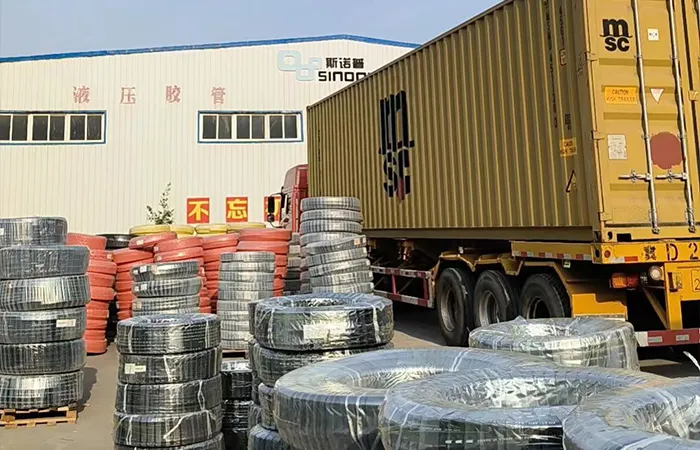
At Sinopulse, we are dedicated to enhancing industrial performance through innovative technology and exceptional customer service. Founded in 2011, Sinopulse began as a small startup with a big dream. Over the past decade, we have grown into a leading industrial hose, hydraulic hose & fittings manufacturer boasting a 45,000 m² workshop, 86 production lines, and a dedicated team of over 200 employees. Our commitment to quality and efficiency enables us to produce an impressive 100,000 meters of hose daily, offering the worldwide most reliable, safe, and most efficient qualified hose and coupling.


×
-
 45,000 m²Factory Area
 -
 86 +Production Line
 -
 200 +Employee
 -
 400,000 +Capacity
WHY CHOOSE US
-
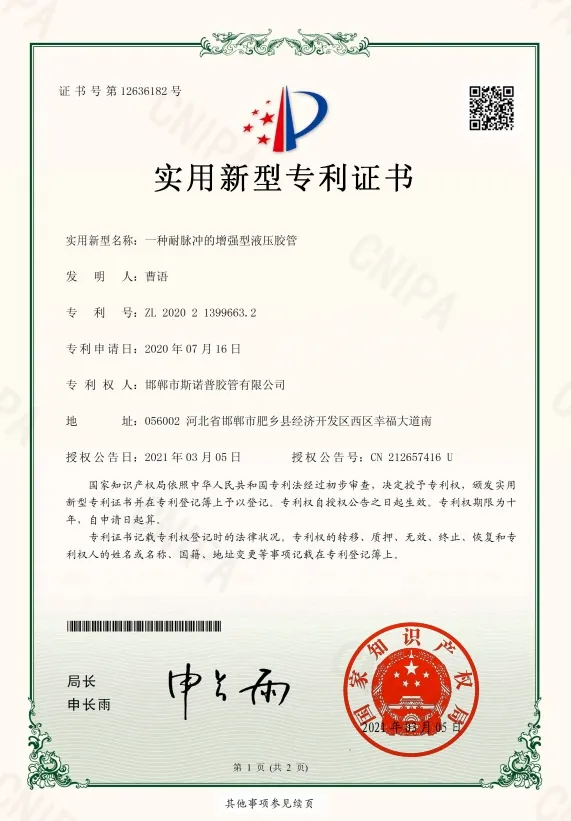
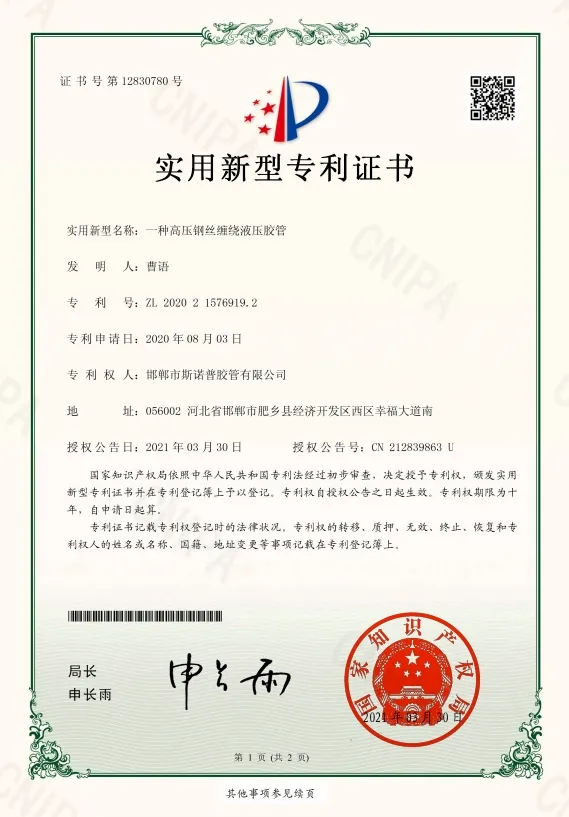
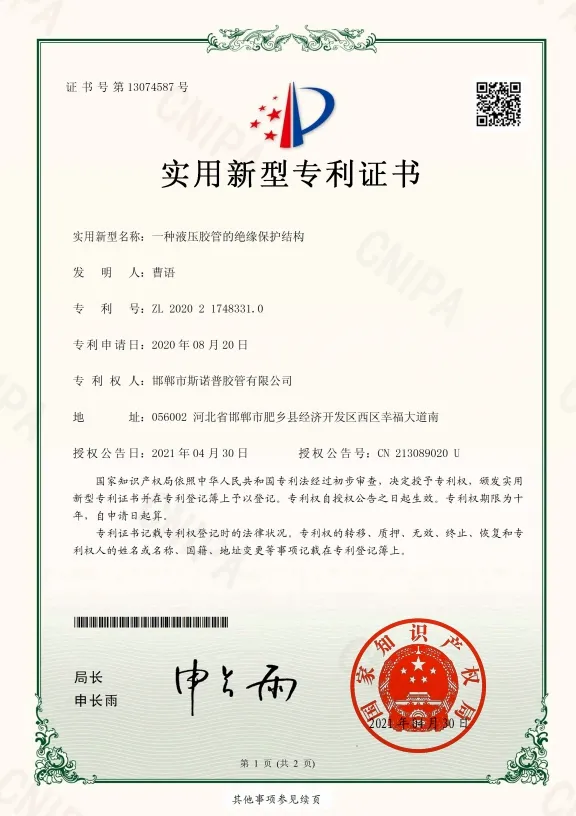
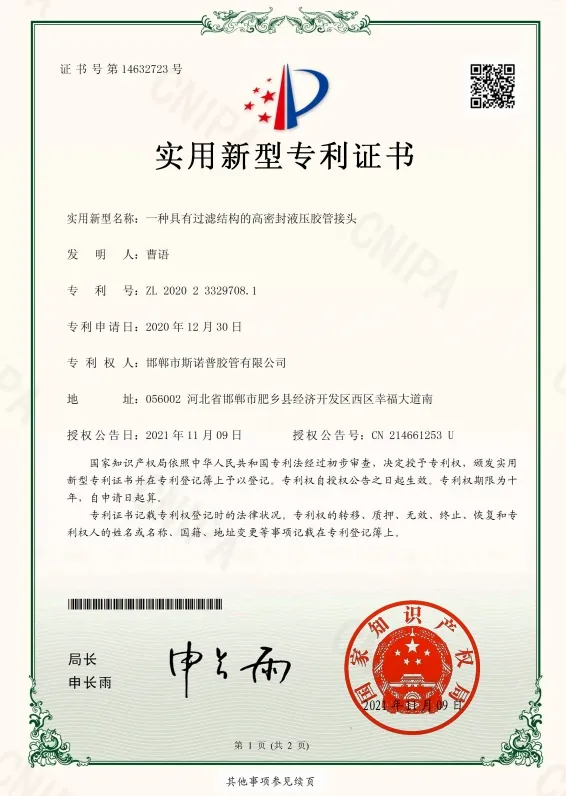
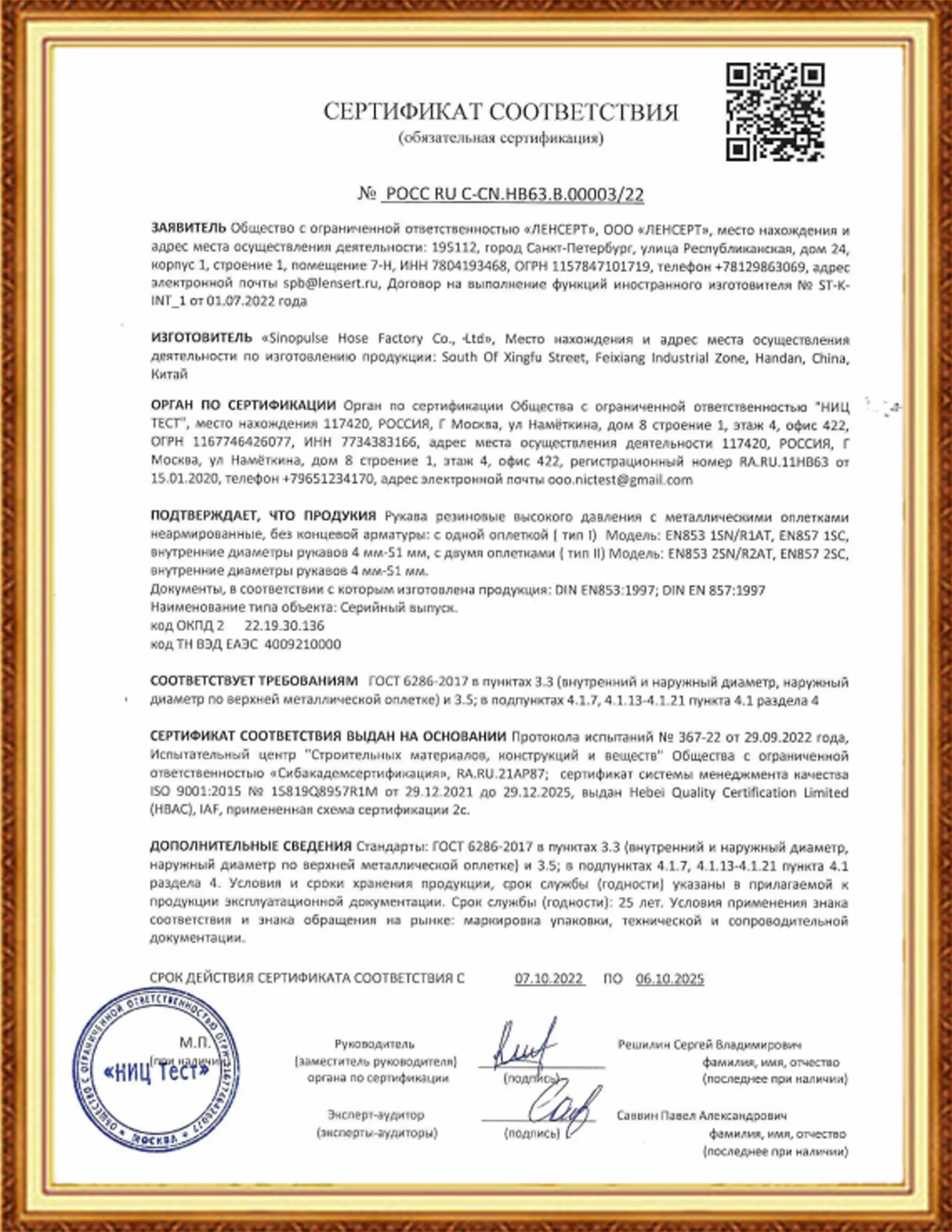
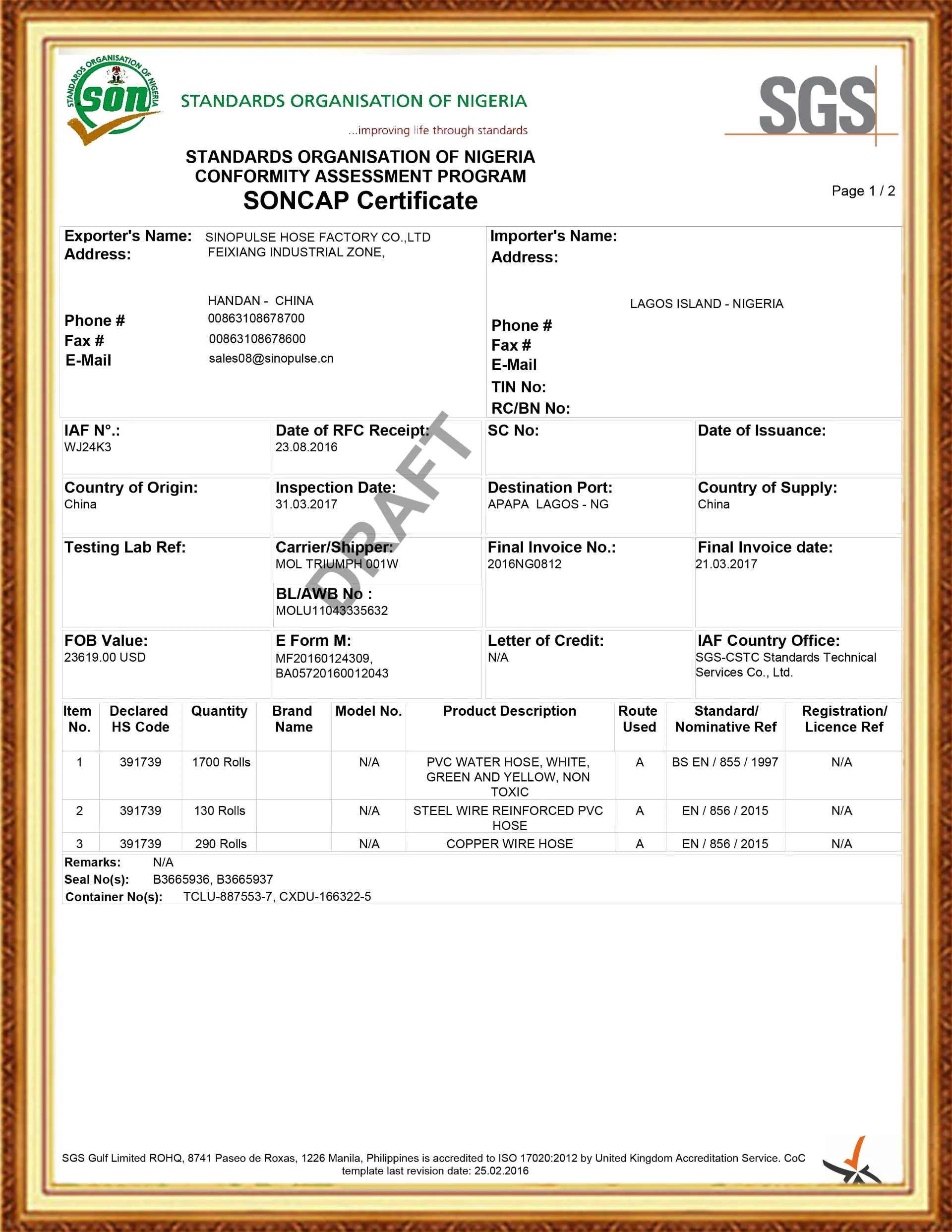
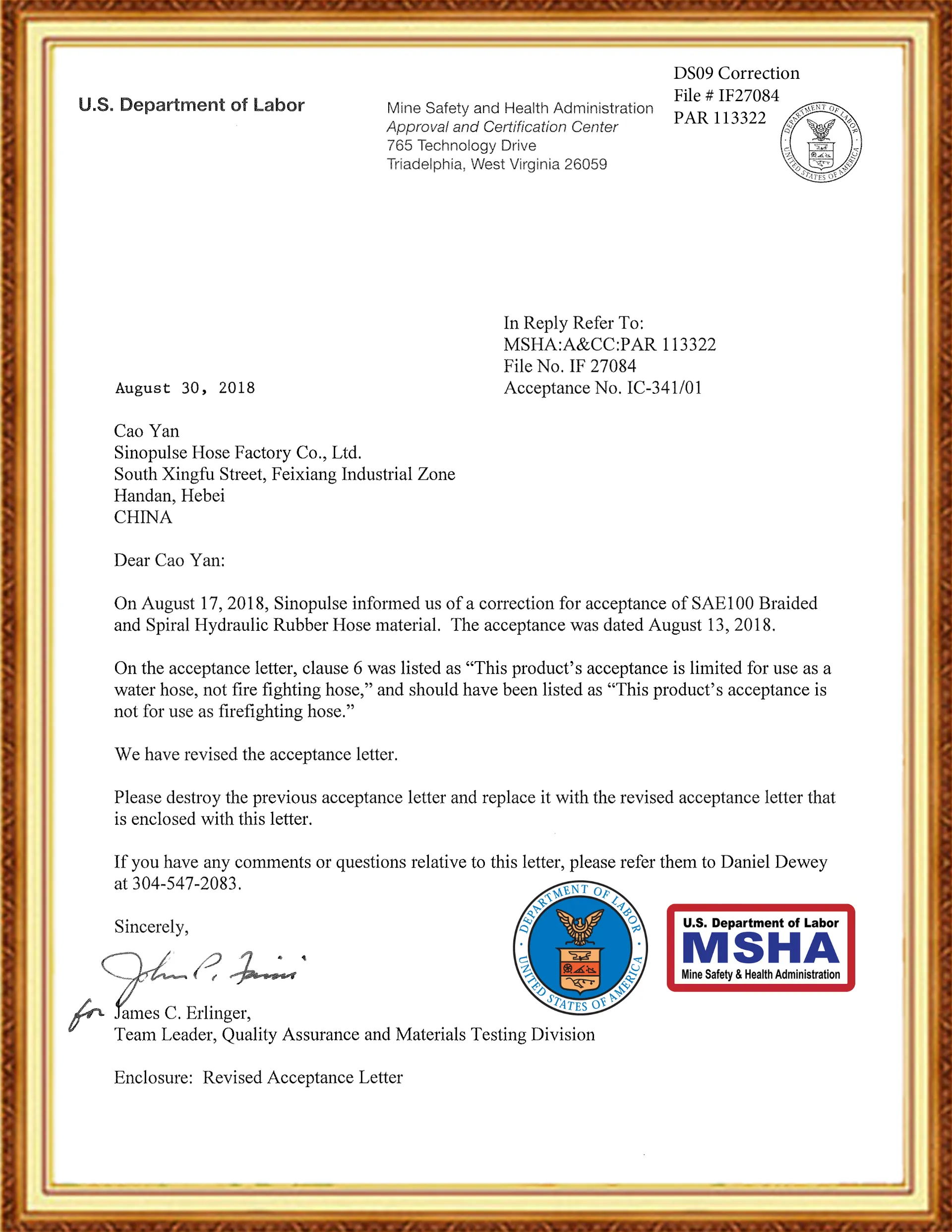
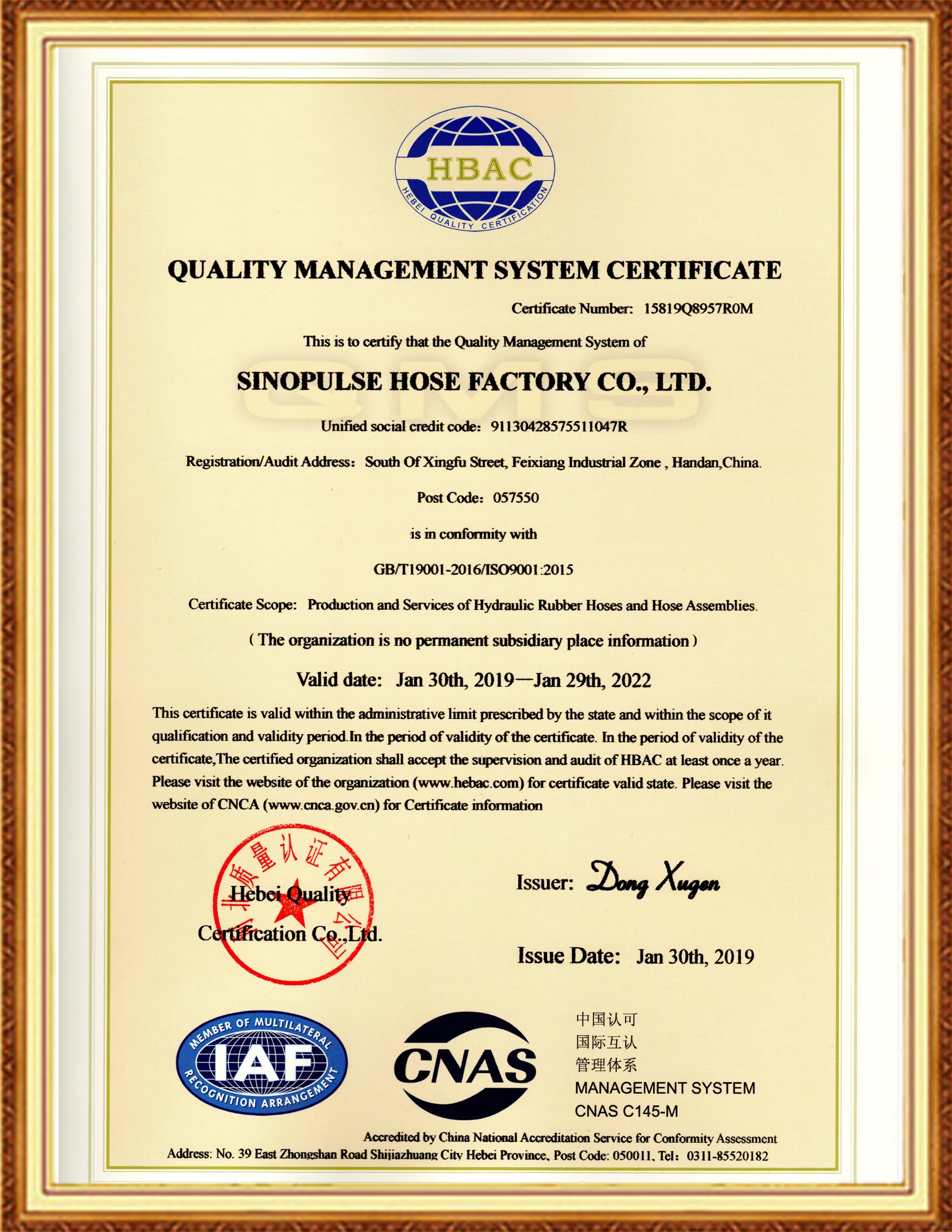
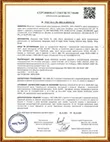
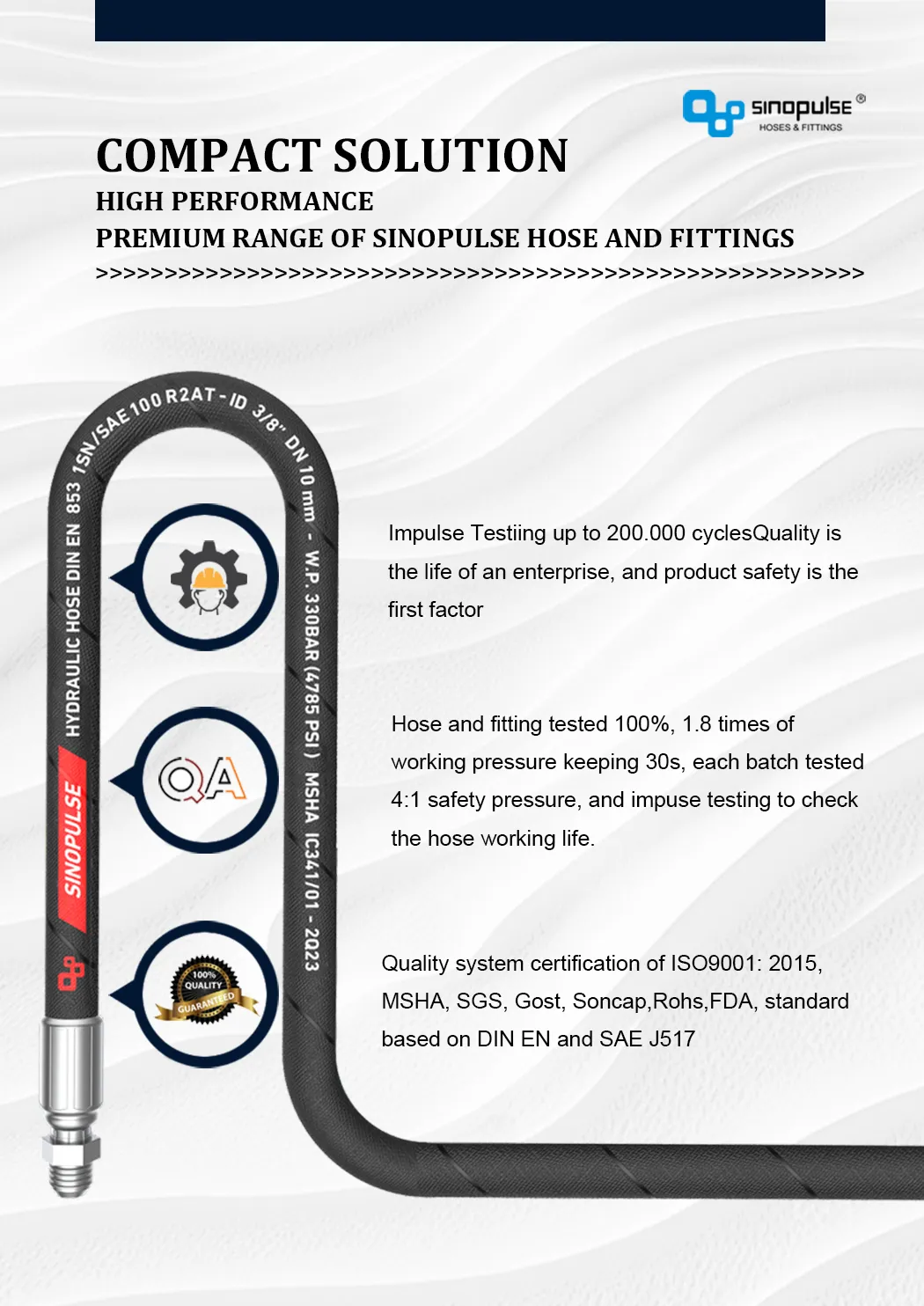
When it comes to choosing a reliable and trustworthy partner for your business needs, certification is a crucial factor to consider. At our company, we take pride in our commitment to meeting the highest standards of quality and safety, as evidenced by our certifications including ISO, MSHA, GOST, SGS, FDA ....More>>

-
One of the key strengths of SINOPULSE’s R&D capabilities is its ability to design hoses for a wide range of conveyor fluids. Whether it’s hydraulic oil, water, air, or specialized chemicals, the company has the expertise to develop hoses that are compatible with the specific fluid’s properties. This versatility allows SINOPULSE to cater to diverse industries such as construction, mining, agriculture, and manufacturing, where different fluids are used for various applications.More>>
-
SINOPULSE QUALITY CONTROL system is a comprehensive and advanced system that ensures the highest standards of quality in manufacturing processes. Quality control is a critical aspect of any manufacturing operation, and the SINOPULSE system is designed to provide a robust framework for monitoring and maintaining quality throughout the production process.More>>
-
SINOPULSE’s gold medal service in foreign trade, coupled with its emphasis on team service and product excellence, positions the company as a leader in the industry. With a focus on delivering tailored solutions and exceptional customer support, SINOPULSE continues to set the standard for excellence in international trade services.More>>
-
 20 YearsExperience
 -
 120 +Exported Countries
 -
 200 +Clients
 -
 30 Million USDAnnul Sales
OUR PROJECT
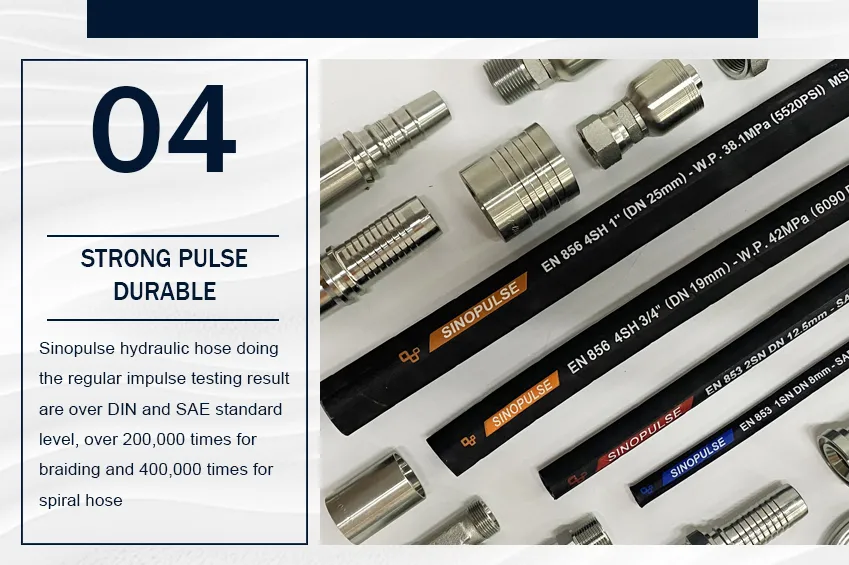
Our rubber hose products have good performance advantages, such as pressure flexibility, strength, weather resistance, no deformation, and good pulse testing.
-
 automobile air conditioning hoseAir conditioner hose solutions are the backbone of robust climate control systems across automotive, HVAC, industrial, and process engineering sectors. With demand for reliability, energy efficiency, and regulatory compliance on the rise, selecting the right air condition hoses — and manufacturer — is essential for seamless operation. This in-depth guide will explore the latest air conditioner hos...
 -
 chemical hose factoryen 853 hose is a key solution in the manufacturing industry, specifically within Special Equipment Manufacturing Industry and Manufacturing of hydraulic and pneumatic power machinery and components. This article explores how HEBEI SINOPULSE TECH GROUP CO.,LTD. supports professionals with durable, high-performance products, and explains why this product is an ideal choice for businesses in these se...
 -
 air conditioning tubingChoosing the Right Air Conditioning Rubber Hose: Field Notes, Specs, and Real-World Lessons If you’re speccing an Air Conditioner Hose for mobile A/C lines, don’t let the humble look fool you. This part quietly decides whether your system sips refrigerant all summer or leaks it by July. I’ve toured plants in Hebei and the Midwest; the best-performing hose almost always pairs a stable elastomer wit...
 -
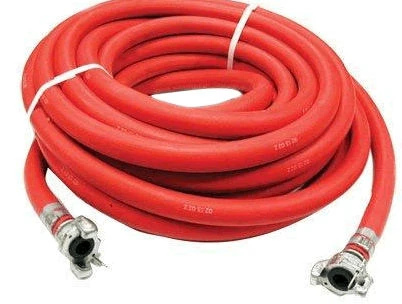
 rubber hose supplierRubber Delivery Hose is a key solution in the Industrial equipment and supplies industry, specifically within Fluid transmission and control equipment and industry hose. This article explores how HEBEI SINOPULSE TECH GROUP CO.,LTD. supports professionals with durable, high-performance products, and explains why this product is an ideal choice for businesses in these sectors. Table of Contents Rubb...
OUR LATEST NEWS
Strict quality control strict production team to ensure stable products quality. Scientific personnel management, efficient production arrangements to ensure our timely delivery.
HOW TO FIND US
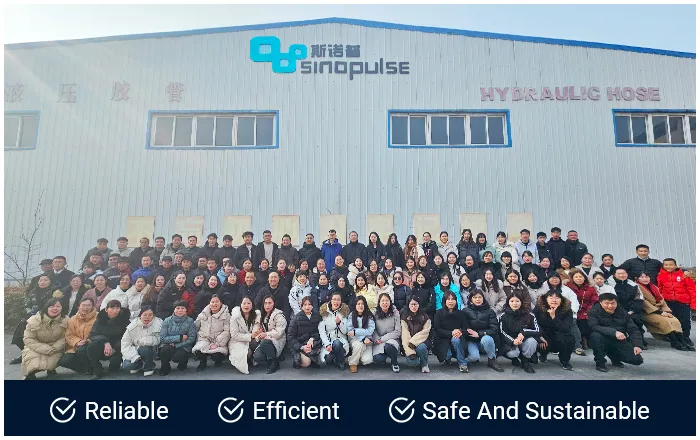
We welcome customers from all over the world visit our hydraulic hose factory and make fruitful cooperation. If you need hoses, contact with us without hesitation. We will give you professional service,qualified goods and best prices!
HOW CAN WE HELP ?
Have questions or need help? Use the form to reach out and we will be in touch with you
as quickly as possible.